The Financial Circles of Agency™
Clarifying Agency Without Ignoring Systems
By Wendy Molyneux, MSW, CFEI®, wholeperson.finance, attribution required
Core Insight: Financial empowerment happens when a person is aware of what they don’t control, so that they can act clearly and confidently within what they do.
Suggested Quote: “What’s beyond our influence is real. What’s within our influence is real. The work is learning to tell the difference. Then we stop blaming ourselves for the money circumstances we never had power over and start acting where we can.”
When facing financial stress, people often swing between two extremes: feeling powerless or feeling entirely responsible. Neither reaction reflects reality.
The Circles of Influence model, popularized by Stephen R. Covey, offers a middle path by distinguishing between three domains: what a person can control, what they can influence, and what lies outside their individual reach.
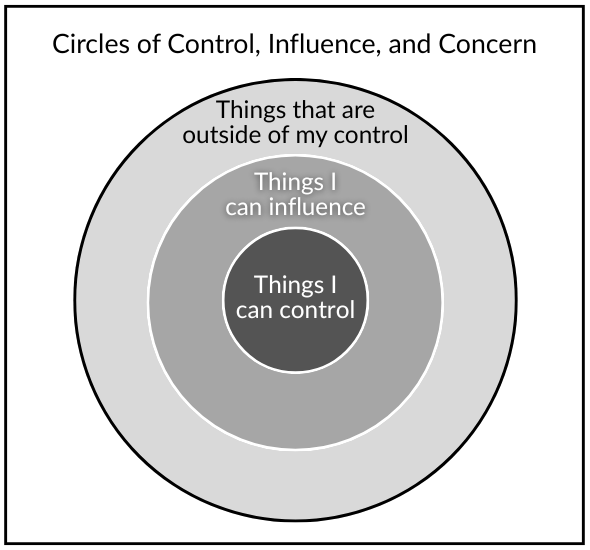
The Financial Circles of Agency™—a framework detailed in my book, Financial Trauma: Why Money Isn’t Just About Money (2026)—adapts the concentric-circle model to the specific complexities of financial well-being. This adaptation applies a trauma-informed lens to people’s financial lives, recognizing that “agency” is more than a choice; it is a capacity they reclaim by understanding their nervous system and the larger systems they live in.
The Three Circles in Financial Life
Circle of Control
Direct actions and decisions an individual can make immediately.
Examples include:
►Spending, saving, and debt repayment choices
►Financial learning habits
►Noticing emotions and nervous system responses before making money decisions
Circle of Influence
Areas a person can shape but not fully determine.
Examples include:
►Negotiating compensation
►Improving credit over time
►Encouraging healthier money communication in a relationship
►Rebuilding trust in financial institutions after past harm
Circle of Concern
Conditions that matter but remain outside individual control.
Examples include:
►The economy
►Stock market volatility
►Institutional and societal norms
►Generational financial patterns
►Discrimination and systemic inequities
Systemic inequities often sit within the Circle of Concern at an individual level, even though they can be addressed collectively through advocacy, policy, and community action. Recognizing this distinction reduces self-blame without denying structural reality.
Shifting the Internal Narrative
The Financial Circles of Agency™ framework becomes especially powerful when it reshapes self-talk.
Instead of:
“I should be better with money by now.”
The question becomes:
“Given my history and the systems I operate within, what is one step I can take inside my Circle of Control?”
Instead of:
“Everyone else has this figured out.”
The shift becomes:
“What barriers belong in my Circles of Influence and Concern, and what remains within my Circle of Control?”
By focusing effort where it has leverage, individuals reclaim financial agency without absorbing responsibility or shame for forces they did not create.
Media Credits and Use
The material on this page is available for use only by credentialed journalists from established media sources. Use of this content requires proper attribution to Wendy Molyneux, MSW, CFEI® as the original author. To provide readers with full resources, a backlink to WholePerson.finance is appreciated. Wendy is available for inquiries and interviews; media inquiries are typically addressed within 24 hours. Book or contact here.
Licensing & Professional Use
The frameworks and models on this site are proprietary intellectual property developed by Wendy Molyneux, MSW, CFEI®. While this content is made available here for journalistic reference, professional use—including training, curriculum development, clinical application, or organizational programming—requires a licensing agreement or formal collaboration. If you’re a therapist, educator, or organization interested in bringing this work to the people you serve, I’d love to explore what that might look like. Reach out here.
Note: This content is for educational purposes only and does not constitute professional financial, medical, or mental health advice.